 En
En
 Fn
Fn


Our Journey Towards Belonging
2-YEAR EQUITY, INCLUSION, DIVERSITY, & ANTI-RACISM (EIDA-R) PLAN
Land Acknowledgement
We acknowledge that Finlandia Village provides care on the traditional lands of the Atikameksheng Anishnawbek. We also recognize that the Greater City of Sudbury encompasses the ancestral territories of the Wahnapitae First Nation within the Robinson-Huron Treaty territory.
We honor the profound connections of Indigenous peoples to this land, their deep cultural heritage, and the ongoing contributions of First Nations, Métis, and Inuit peoples to our community.
May we continue to strive for mutual understanding, respect, and partnership with Indigenous communities.
MiigwetchCommitment to Indigenous Truth and Reconciliation
Finlandia Village is committed to supporting the process of truth and reconciliation with Indigenous communities by acknowledging the historical and ongoing impacts of colonization, including the legacy of residential schools and systemic discrimination.
We pledge to actively listen to Indigenous voices, respect their cultural practices, and ensure that Indigenous peoples’ rights and perspectives are integrated into the care and services we provide.
By fostering meaningful relationships with Indigenous leaders, communities, and organizations, we strive to create an environment that honors Indigenous traditions, promotes healing, and advances the work of reconciliation within our village.
Key Terms and Definitions
Guiding Principles
Respect and Recognition
We will respect and honor the rights, traditions, and cultures of all individuals. We are committed to acknowledging the historical and ongoing impacts of colonization and prioritizing the inclusion of Indigenous perspectives and practices in care.
Equity and Fairness
We are dedicated to creating a fair and equitable environment where all residents, staff, and families have equal access to resources, opportunities, and support, regardless of their background, identity, or experiences.
Cultural Sensitivity and Humility
We will engage in continuous learning and self-reflection to understand and address our own biases. We embrace cultural humility, recognizing that true cultural competence is a lifelong journey that requires openness to new perspectives and practices.
Community and Belonging
We will create an environment where all residents, families, and staff feel a strong sense of belonging and connection. Our village will be a place where diversity is celebrated, and everyone’s unique identity is valued and supported.
Collaboration and Partnership
We will work closely with Indigenous communities, Black communities, LGBTQ2IA+ communities, and other marginalized groups to ensure our policies, services, and practices are culturally relevant and aligned with their values. This collaboration will help us build an environment where diverse voices are heard and respected.
Healing and Reconciliation
We recognize the trauma experienced by Indigenous peoples due to historical injustices such as residential schools and systemic racism. Our plan emphasizes healing, reconciliation, and the importance of fostering a safe, supportive, and healing-centered environment.
Continuous Improvement and Innovation
We are committed to continuously assessing and evolving our practices to ensure they remain inclusive, equitable, and effective. We will foster a culture of innovation where new ideas, feedback, and approaches are welcomed and valued.
Indigenous Health Equity Policy
Policy Statement
To ensure equitable, culturally safe, and trauma-informed care services for Indigenous peoples living at Finlandia Village, grounded in reconciliation, respect, and in partnership with First Nations, Inuit, and Métis communities in alignment with Ontario’s health equity standards, the Ontario Human Rights Code, and the Truth and Reconciliation Commission’s (TRC) Calls to Action.
Purpose
- Truth and Reconciliation: Guided by the TRC’s Calls to Action, particularly those related to health (#18–24) and seniors (#19).
- Cultural Safety: Care environments must be free of racism and discrimination, and support Indigenous identity, knowledge, and healing practices.
- Equity and Inclusion: Indigenous residents have the right to equitable care that is responsive to their cultural, spiritual, social, and linguistic needs.
- Self-Determination: Indigenous residents have the right to guide decisions that affect their health, care plans, and cultural practices.
Principles
- Indigenous Person-Centered Care
- Residents identifying as First Nations, Inuit, or Métis will be offered culturally appropriate care and services.
- Care plans will be co-developed with Indigenous residents and/or their families, incorporating traditional healing practices if desired.
- Ceremonial spaces and practices (e.g., smudging, drumming) will be respected and supported within safety protocols.
- Indigenous languages, where available, will be supported through translation, signage, or interpretation.
- Cultural Support and Community Engagement
- Finlandia Village will develop and maintain partnerships with local Indigenous organizations, Elders, and Knowledge Keepers.
- Elders and Indigenous cultural advisors may be invited to support policy building, care planning, healing, and ceremonies.
- Indigenous residents and families will be invited to participate in advisory roles (e.g., councils and advisory groups)
- Leadership and Governance
- Through the guiding principle of person-centered care, Indigenous health equity will be imbedded into strategic plans, quality improvement frameworks, and senior leadership goals.
- Staff Education and Cultural Competency
- Team members will complete ongoing training on Indigenous cultural safety, anti-racism, and colonial history, including the impacts of residential schools.
- Training will include distinctions-based content (First Nations, Inuit, Métis) and be evaluated annually.
- Anti-Racism and Accountability
- Discrimination, stereotyping, or culturally unsafe behavior toward Indigenous residents or staff will not be tolerated.
- Performance reviews for leadership and staff will include evaluation of cultural safety practices.
- Data and Continuous Improvement
- Voluntary self-identification of Indigenous identity will be supported with privacy and sensitivity.
- Indigenous resident health outcomes, satisfaction, and access will be monitored to identify disparities and inform improvement plans.
- Annual health equity audits will include Indigenous-specific indicators.
- Roles and Responsibilities
a) Indigenous Health Equity lead
- Champion policy building and implementation.
- Ensure leadership accountability and resourcing.
- Monitor outcomes.
b) Leadership
- Ensure team member training.
- Support culturally safe practices.
- Monitor outcomes
c) Team members and Volunteers
- Complete mandatory education.
- Provide culturally respectful and safe care.
d) Residents & Families
- Provide input into culturally appropriate care and service delivery.
References
- Truth and Reconciliation Commission of Canada: Calls to Action
- Ontario Human Rights Code
- Indigenous Services Canada: Cultural Safety Resources
- Ontario Health: Equity, Inclusion, Diversity Framework
- Ontario Health: First Nations, Inuit, Métis and Urban Indigenous Health Framework
- Indigenous Primary Health Care Council (IPHCC) — iphcc.ca
This policy will be reviewed annually and updated in consultation with Indigenous partners and community members.
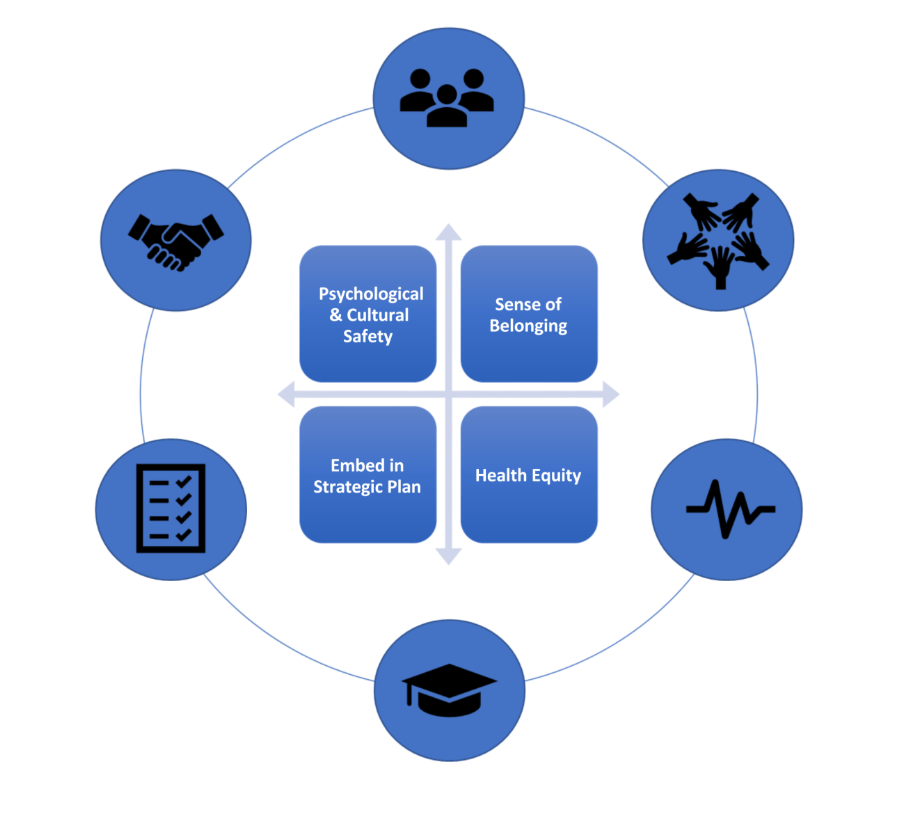
Our Strategic Plan Framework
Residents & Families
Ensure all residents and families feel respected and included, incorporating their cultural needs into care plans and fostering open communication. Feedback will be regularly gathered to improve care.
Continuous Learning and Innovation
Ensure all residents and families feel respected and included, incorporating their cultural needs into care plans and fostering open communication. Feedback will be regularly gathered to improve care.
People (Staff, Volunteers, Students, & Contractors)
Promote a diverse and inclusive workforce by prioritizing equitable hiring practices and offering ongoing training on cultural competence and anti-racism.
Accountability
Set clear goals, monitor progress, and ensure transparency to track the success of our diversity and equity initiatives, holding leadership accountable for outcomes.
Health Equity (Indigenous, Black, and Other Racialized Communities)
Commit to addressing health disparities by ensuring that care is tailored to meet the specific needs of marginalized communities, such as Indigenous, Black, and other racial or ethnic groups.
Partnership
Build strong partnerships with Indigenous, Black, LGBTQIA+, and other marginalized communities to ensure their needs are reflected in our care and services.
Timeline
| Goals | Actions | Measurements |
|---|---|---|
| Formation of the Diversity and Inclusivity committee and establish foundational groundwork for the EIDA-R strategy. |
|
|
| Prioritize Policy Review, Revision Plan & staff awareness. |
|
|
| Achieve 100% Initial EIDA-R Training Completion for Leadership and at least 75% initial EIDA-R training completion rate for staff. |
|
|
| Strengthen initiatives, establish strategic plan and prepare for Year 2 expansion. |
|
|
| Goals | Actions | Measurements |
|---|---|---|
| Review effectiveness of Year 1 efforts and build upon them. |
|
|
| Integrate EIDA-R principles into daily operations and care practices by conducting a resident and family survey. |
|
|
| Build community partnership and focus on health equity. |
|
|
| Transition to long-term EIDA-R goals and ensure sustainability. |
|
|
 Ontario Health’s Equity, Inclusion, Diversity and Anti-Racism Framework